On-Grid or Hybrid Solar — Choose Around Your Daily Routine
On-grid and hybrid are common terms in solar quotations, but a label alone does not tell you whether a system suits your life. The more useful starting point is your daily routine. Think about when the property uses electricity, what you want solar to achieve and how you would like the system explained at handover.
This guide helps homeowners and business owners in Thailand prepare for that discussion. It covers the main differences without assuming one arrangement is best for everyone. A site assessment and a clear equipment proposal are still needed. Contact SolarSunThai with your property details if you want to compare suitable options around your needs.
Start with the jobs you want solar to do
Write down your main aim before looking at a package name. You may want to use solar electricity during working hours, store some energy for later, prepare for a future change or discuss selected loads during an outage. These are different goals. Putting them in order helps the designer explain which equipment and arrangements are relevant to the proposal.
Share a typical weekday and weekend routine, not just your busiest day. Include whether the building is often empty, whether anyone works from home and when larger appliances normally run. For a business, describe opening hours and seasonal closures. This information makes the discussion more useful than choosing between two quotations simply by comparing the total panel capacity printed at the top.
Understand the basic on-grid arrangement
An on-grid solar system operates with the electricity grid. Solar panels produce electricity during daylight, and the inverter converts their output into the form used by the building. The property can still draw electricity from the grid when needed. The exact layout, metering and any export controls must be specified for the installation rather than assumed from a general diagram.
Ask the provider to show how electricity moves through the proposed system during an ordinary day. Use simple examples, such as a morning with someone at home and an evening when the property is busier. The home solar savings guide can help you describe that routine. Request an explanation of the utility process that applies to your property in Thailand.
Ask what the word hybrid includes
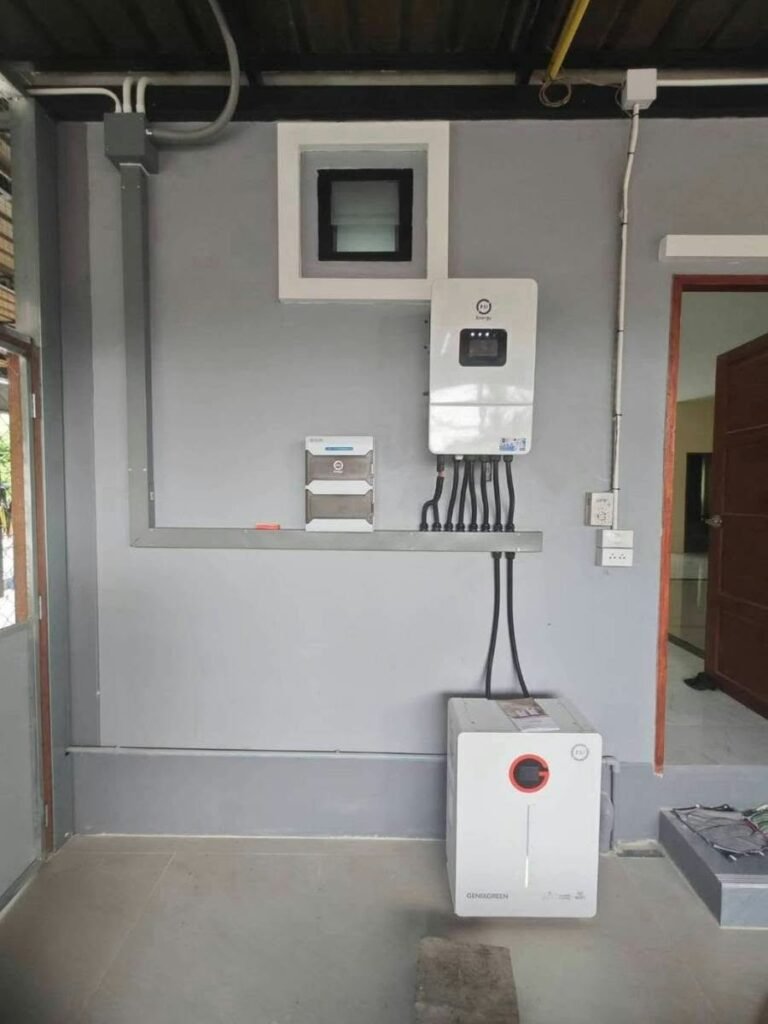
Hybrid is often used for an arrangement that can coordinate solar, battery storage and a grid connection. However, quotations may use the term differently. Ask whether a battery is included now, which model is proposed and what other equipment is part of the package. A battery-ready description should be explained just as carefully as a system that includes storage from the start.
Request a plain list of what the proposed system will do at installation and what would require additional work later. Ask the provider to identify any equipment dependency rather than leaving it under a general promise of flexibility. Our solar battery storage guide provides a useful starting point for questions about how storage fits into the wider design.
Keep storage and backup as separate questions
A battery can store energy, but installing one does not automatically provide electricity during a grid outage. Backup operation requires compatible equipment and a suitable arrangement for disconnecting from the grid and supplying the intended loads. Ask the provider to state this capability explicitly. The US Department of Energy’s inverter overview explains that outage operation depends on how the system is designed.
If backup matters, request a list of the circuits or appliances covered and ask about power limits, expected duration and operating conditions. A system designed for selected essential loads should not be described as supporting everything without checking. Ask how the arrangement will be demonstrated at handover. This gives you a concrete description of the result instead of relying on the word hybrid.
Make the next step about your property.
Tell us your location, property type and main questions. Use the Contact Us form to send SolarSunThai the details you would like to discuss.
Compare the routine across a whole day
Describe when electricity is needed most, using records if available. A property occupied through daylight may have different priorities from one that becomes busy after sunset. There can also be quieter periods when solar production and building demand do not match. Storage is one possible part of that discussion, but it should be assessed alongside the actual pattern of use.
The Department of Energy’s storage explanation describes how stored energy can be used at another time. For your own proposal, ask how much energy is expected to be available for charging after daytime use. Avoid assuming that every battery can be filled by surplus solar every day. Weather, consumption and system sizing all need to be considered together.
Compare the complete scope and ownership costs
Place the full scope of each proposal side by side. Include panels, inverter, any battery, installation work, monitoring, required electrical changes and the described utility process. Ask what is excluded and who is responsible for each stage. Two quotations with similar headings can cover different work, so make those differences visible before deciding which represents better value for your property.
Ask about maintenance expectations, product warranty terms and how future support is arranged. If a financial comparison is supplied, request the assumptions about use, electricity charges, system performance and storage behaviour. Ask SolarSunThai to help clarify the options you want to compare. A useful discussion explains why an item is proposed and what need it addresses, without relying on a universal savings promise.
Be specific about future changes
You may be planning an electric vehicle, an additional room, a new tenant or longer business hours. Mention these possibilities early, and explain how certain they are. A change expected next month deserves a different discussion from an idea that may never happen. Ask the designer to distinguish the current system requirements from allowances for a later stage.
If adding storage later is a priority, ask which compatible products are supported now and what installation work would still be needed. Future product availability cannot be guaranteed by a general label. Request a written explanation of the upgrade path and its limits. The solar packages page can help begin the conversation, but the final arrangement should reflect your own property.
Match equipment decisions to the property
Roof area is only one part of a site discussion. The designer also needs to consider the available installation areas, electrical arrangement and where equipment could be placed. If storage is proposed, ask how its location will be assessed and how the equipment instructions will be followed. Explain any access restrictions, shared spaces or building changes already planned.
For a rented or shared property, establish who can approve the work and who will own the equipment. A practical design also needs a practical decision process. Share this context before the quotation is finalised so responsibility is clear. You can then compare systems that are actually suitable for installation rather than selecting an attractive package that later needs substantial changes.
Ready to discuss your solar options?
Share your energy priorities and available property information through the Contact Us form. Ask about the next step and the assessment suitable for your location.
Ask for a clear owner demonstration
Whatever system you select, request a handover that explains normal operation in the language you prefer. You should know where the documents are, what the monitoring can show and who to contact with a question. Ask for the difference between an owner observation and work reserved for a qualified professional. Keep the equipment list with the final proposal for future reference.
If the installation includes storage or backup, ask for those functions to be explained separately. Confirm the supported loads, limits and any owner instructions for the approved arrangement. Do not test an outage by altering electrical connections yourself. The demonstration and documentation should give you confidence about the specified behaviour, while professional support remains available for questions or unexpected events.
Choose the explanation that fits your priorities
A good proposal should allow you to describe the system simply to someone else. You should be able to say what it does during a normal day, what storage adds if included and what happens when the grid is unavailable. If those answers are unclear, ask for them again before approving equipment. Plain explanations are part of making an informed purchase.
The right next step is to bring your goals, routine and property details into one conversation. On-grid and hybrid options can then be compared around those facts. Contact SolarSunThai to discuss on-grid and hybrid solar for your property in Thailand. Include your location, recent electricity information and whether your main priority is daytime use, storage, backup or planning for future changes.
Keep exploring your solar options
Solar for Shops and Offices · Solar and EV Charging
Browse all SolarSunThai blog posts for more guides in English and Thai.
Start with a clear conversation.
Test the choice against one routine and one outage scenario
For the routine scenario, describe a normal day and evening at the property. Ask how each proposed system would meet that pattern and what assumptions are being made about daytime surplus or evening demand. Keep the equipment and installation scope visible beside the estimate. This helps explain why an on-grid arrangement or a storage proposal might suit the routine without treating one label as universally preferable.
For the outage scenario, list only the equipment you would want supported and explain which loads could be left off. Ask the designer to state what the proposed arrangement can do, what it excludes and which limits matter. If the answers differ from your original expectation, revise the brief before choosing equipment. The comparison is then between two clearly described outcomes rather than between broad product categories. Keep the scenarios with the quotation so any later substitution or upgrade can be checked against the purpose you originally agreed.
Tell SolarSunThai about your property and what you want solar to do. Complete the Contact Us form to ask a question or request an assessment. English: Joe +66843200279. Thai: +66847561520. Email: info@solarsunthai.com.