Solar for Hotels and Guesthouses — Plan Around Your Guests
A hotel can be quiet at midday and busy after dark. A guesthouse may have only a few occupied rooms one week and a full building the next. Solar planning needs to recognise these changes. Looking only at the number of rooms or the size of the roof can miss the way guests and staff actually use the property.
This guide helps owners and managers prepare an informed solar enquiry for a hotel, small resort or guesthouse in Thailand. The focus is the electricity behind everyday hospitality: cooling, kitchens, laundry, pumps and shared spaces. Your goal is to build a plan around normal operations while protecting guest comfort and understanding the limits of any proposed system.
Look beyond the number of guest rooms
Room count is an easy figure to share, but it cannot explain the whole electricity bill. Two properties with the same number of rooms may have different facilities, building layouts and occupancy levels. One may have a restaurant, a pool and in-house laundry. Another may provide a simple breakfast and send its laundry elsewhere. Record what your property actually operates.
Make a list of the main areas, including reception, corridors, kitchens, staff facilities and any separate buildings. Explain which areas are open to day visitors and which only serve staying guests. A useful solar assessment considers the property as a working business. It should not rely on a standard electricity allowance for every room and assume that the rest of the building behaves the same way.
Read occupancy and electricity records together
Gather a year of electricity bills where possible and place monthly occupancy figures beside them. Mark closures, renovations and periods when part of the property was unavailable. These notes help explain why a bill changed. They also help distinguish a normal low season from a month affected by building work or an unusual change in the business.
Look for periods when electricity use remained high despite fewer guests. Some shared equipment may continue running regardless of occupancy. This observation is a question for investigation, not proof of waste. Your records can help an assessor understand the continuing daytime load. Contact SolarSunThai with your bills and occupancy pattern to ask what further information would support a useful first review.
Distinguish daytime work from evening demand
Guests often return in the late afternoon and use cooling, lighting and hot water during the evening. Meanwhile, housekeeping, laundry and food preparation may use electricity during daylight. Put these activities on a simple daily timeline. Include quiet periods between checkout and check-in, since the building may still be busy even when many guest rooms are temporarily empty.
Solar production takes place during daylight and changes with site conditions and weather. A useful proposal should compare that production with the property’s actual demand at the same times. It should also explain the remaining evening electricity requirement. Avoid a plan that treats an annual generation total as though every unit were available whenever a guest turns on an appliance.
Review laundry and housekeeping without rushing staff
List the laundry equipment used on site and its usual operating hours. Explain how staff handle busy checkout days, urgent linen needs and quieter periods. If laundry is outsourced, state that clearly. The assessor should not assume an on-site load that is missing from your bill. Housekeeping equipment, service lifts and water systems may also be relevant to the daily pattern.
Some tasks may have flexible timing, but changes should still work for staff and guests. Moving a task into daylight is only sensible if the resulting process remains practical. Do not promise a revised timetable before speaking with the people doing the work. You can explore the wider business context in our commercial solar information before deciding what operational changes to investigate.
Make the next step about your property.
Tell us your location, property type and main questions. Use the Contact Us form to send SolarSunThai the details you would like to discuss.
Separate cooling, hot water and pool equipment
Ask your maintenance contact to describe the main cooling and hot water arrangements in plain language. Identify whether rooms use individual equipment or whether the building shares central plant. Electricity used for water heating should be included only where that is how your property heats water. Solar electricity and solar water heating are different technologies and should be described clearly in any discussion.
If the property has a swimming pool, record the existing pump and treatment schedule. Water quality and guest safety still govern how that equipment operates. Do not alter a pool schedule simply to chase a solar production curve. A qualified professional should review any proposed change. The most useful starting point is an accurate description of current operation and the reasons behind it.
Consider the roof as part of the guest experience
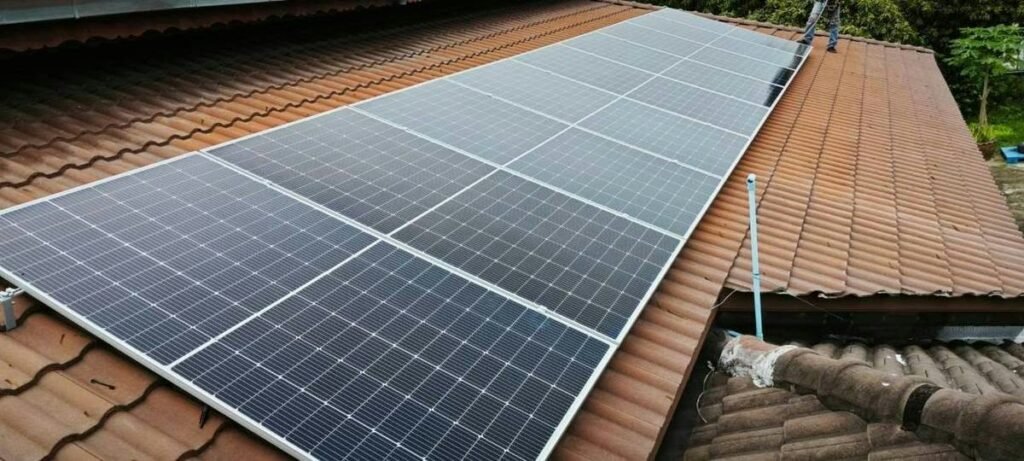
Hotel roofs may support tanks, ventilation equipment, access paths or guest facilities. Some may be visible from upper rooms or neighbouring properties. Explain these uses during the assessment, including planned roof repairs or changes to the building. Usable panel space has to allow for the complete property, rather than assume that every open part of a roof is available.
Ask how inspections and any installation work could be arranged around occupied rooms, deliveries and staff movement. Discuss access, likely noise and the need for clear communication with the duty manager. A thoughtful plan should make these arrangements understandable before dates are agreed. Photographs can help the first conversation, while structural and electrical suitability still need an appropriate professional review.
Define essential services before discussing backup
Hotels can have strong reasons to investigate continuity of power. Reception systems, selected lighting, communications or specific water equipment might be priorities. Write down the essential functions and the period you want to explore. A request to keep the entire hotel running through an outage is much broader than a request to support a few agreed circuits.
A solar installation does not automatically provide backup when the grid fails. Batteries and backup functions require a suitable design, and their limits should be written clearly. Read our solar and battery guide for the basic questions. Then ask SolarSunThai about assessing your essential-load priorities rather than assuming a battery can support every guest service.
Keep efficiency improvements in the same conversation
If you plan to replace cooling equipment, improve controls or change kitchen appliances, share that plan before sizing solar. The future electricity pattern could differ from the historical bill. Explain what work is approved and what is only being considered. This allows a proposal to show its assumptions clearly and avoids presenting uncertain changes as a fixed part of the forecast.
Guest comfort should remain central to that discussion. The US Department of Energy hospitality resources discuss energy management alongside hotel operations and comfort. Their general guidance is useful background, while local equipment choices and building conditions need their own assessment. You can ask for a clear sequence of decisions instead of trying to change every part of the property at once.
Ready to discuss your solar options?
Share your energy priorities and available property information through the Contact Us form. Ask about the next step and the assessment suitable for your location.
Make the proposal useful for owners and managers
A property manager may need to explain the proposal to an owner who does not manage daily operations. Ask for the expected generation, assumed on-site use, system scope and monitoring arrangements in clear terms. Any financial estimate should show the information used and the factors that could change it. Do not judge the project only by the largest headline percentage in a presentation.
Discuss who will review the system’s reports after handover and who will keep the records. A busy reception team should not inherit an unclear technical responsibility. The contact for normal operation, maintenance questions and changes in the building should be identified. Good paperwork helps the property retain useful knowledge when managers or staff move to different roles.
Send an enquiry that describes the whole property
Prepare your location, room count, main facilities, occupancy pattern and recent electricity bills. Add notes about roof ownership, planned renovation and any existing backup equipment. Explain whether your goal is to use daytime solar electricity, investigate a future battery or simply find out if the property is suitable. This gives the first discussion a clear and realistic purpose.
Include the name or role of the person who can explain day-to-day operations and who can approve a site visit. Keep sensitive guest information out of the enquiry; overall occupancy figures are enough for an initial conversation. Send your hotel or guesthouse solar enquiry to SolarSunThai and ask for the next steps that fit your property and your guests.
Keep exploring your solar options
Solar for Farms · Solar Roof Readiness
Browse all SolarSunThai blog posts for more guides in English and Thai.
Start with a clear conversation.
Build the assessment around occupancy and service areas
Separate guest-room demand from kitchens, laundry, pumps, common areas and other services. Describe how occupancy changes across the year and identify equipment that operates even when rooms are empty. If only a short period of bill information is available, explain whether it represents a busy season or a quieter one. Ask how that limitation affects the assessment rather than assuming one month’s pattern applies throughout the year.
Plan access with the person responsible for guest operations. Identify areas where noise, roof work or electricity isolation would need advance coordination and agree how changes will be communicated. If storage or backup is being considered, list the specific service loads and priorities separately from the whole property’s consumption. Ask for the proposed function and limitations in writing. This keeps the discussion tied to the guesthouse or hotel’s actual service requirements and avoids treating a battery-inclusive offer as a promise that every guest facility will continue operating during an outage.
Tell SolarSunThai about your property and what you want solar to do. Complete the Contact Us form to ask a question or request an assessment. English: Joe +66843200279. Thai: +66847561520. Email: info@solarsunthai.com.