SOLAR SUN THAI · SOLAR GUIDES · CONTACT US
Solar Project Planning in Thailand — What to Check Before Installation
A useful solar project starts with a real building and the people who use it. A family home, a shop and a warehouse can all need a different approach, even when their roofs look similar. This page explains the kinds of questions that shape solar projects in Thailand. It also shows what to look for when you compare an example with your own property.
If you want to see work relevant to your situation, ask SolarSunThai for available project examples. Tell us the type of building, its location and what you hope to change about your electricity use. We can then discuss which examples and planning details are useful for your enquiry. Use the contact page to start that conversation without having to choose a package first.
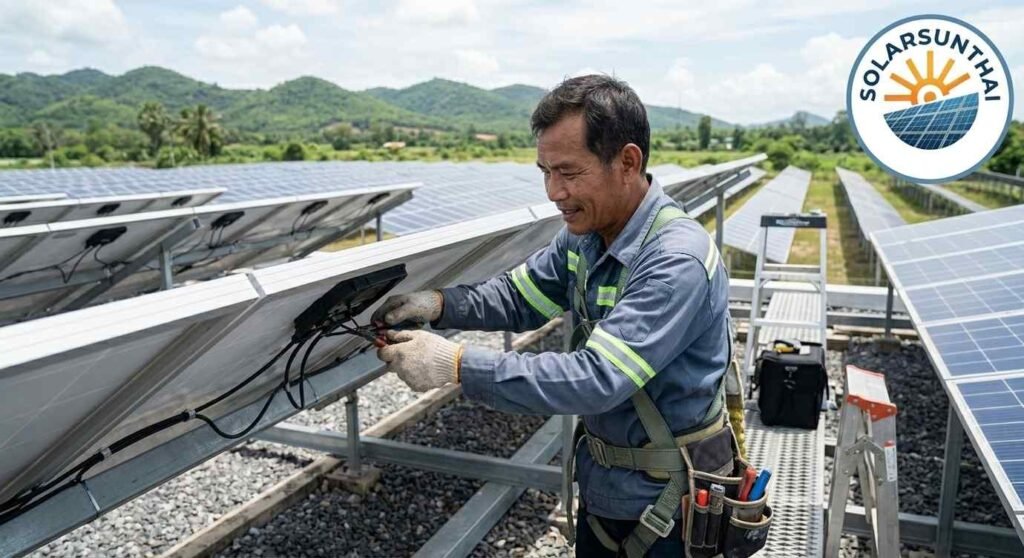
A home project begins with daily life
For a home, the first question is often when electricity is used. Some households have people at home throughout the day. Others are quiet until the evening, when cooking, cooling and other activities begin. The same monthly bill can hide very different daily routines. A useful project discussion connects the roof with those routines, rather than looking only at how many panels could fit.
Explain what you want from the project in ordinary words. You may want to use less grid electricity during the day, understand battery options or plan around a future change at home. Share those priorities before reviewing a design. When you ask about a home project example, also ask what the household needed and how those needs influenced the proposed system.
Business projects need a clear operating picture
A business may use electricity across fixed opening hours, shifts or changing production schedules. That pattern matters when reviewing a solar proposal. A shop that opens every afternoon has different needs from a workshop running through the day. Start by listing normal working hours, the main electrical equipment and any seasonal changes. These details help make the project discussion specific to the business.
Access and timing also deserve attention. A busy entrance, a loading area or a roof above active work may affect how a project is organised. Explain when staff and customers are present and which areas must remain available. If you request a business example, ask how the installation plan was coordinated with the building’s use. Do not assume that every commercial roof follows the same process.
The roof tells part of the story
Photographs can help begin a conversation, but they do not answer every roof question. Roof material, condition, shape, obstructions and access all need attention. Nearby buildings and trees may change where sunlight reaches the roof. Equipment already on the building may reduce the usable space. A project overview becomes more helpful when it explains these limits as well as showing the panels.
When looking at an example, ask why a certain area of the roof was used. A neat photograph alone does not explain the design. For your own property, share clear photographs taken safely from the ground or from an existing accessible area. Tell the team if you know of leaks, planned repairs or recent building work. Never climb onto a roof just to collect information.
Electricity use shapes the system discussion
A solar project should be reviewed alongside the property’s electricity use. Bills provide a starting point, while information about working hours or household routines adds context. A high bill does not by itself show the right system size. It helps to understand when energy is needed, what may change and which assumptions sit behind an estimate. Ask for those assumptions in plain language.
Examples from another building can explain a method, but their results should not become a promise for your roof. Weather, shading, equipment, usage and other site details can differ. When comparing projects, look for information that helps you ask better questions. The useful lesson may be how a design problem was approached, rather than a number that you expect to repeat exactly.
Make the next step about your property.
Share your location, electricity use and main questions with SolarSunThai. Use our contact page to begin a practical conversation.
On-grid and hybrid projects serve different needs
Some project conversations focus on using solar electricity while it is being produced. Others also explore storage and selected backup needs. These are different design questions. If you are comparing an on-grid approach with a hybrid approach, explain the outcome you want before choosing equipment. The right discussion starts with the building and its use, then works toward a suitable system arrangement.
A battery should not be understood as a promise that every appliance will continue working during an outage. Ask which circuits are included, what power limits apply and what affects the time they may operate. If a project example includes storage, request those details. They make the example more informative and help prevent confusion between the presence of a battery and the backup function of the complete design.
A useful project record explains decisions
Good project information answers practical questions. What was the building used for? What did the owner want to achieve? What limits had to be considered? Which equipment and scope were included? These details are often more useful than a large image with a short caption. They help you understand how a proposal relates to the needs of a particular site.
When requesting examples, say which details would help you make a decision. You might want to understand a roof layout, access planning, battery circuit choices or the steps between enquiry and installation. Ask for the information that is available and relevant. This page does not present unnamed buildings or assumed results as verified SolarSunThai case studies. Specific examples should be discussed directly with the team.
From a first enquiry to a written scope
The early stage is about collecting enough information to ask sensible questions. Share your location, building type, electricity bills and a short description of the roof. Explain whether you own the property and who else may need to take part in a decision. A clear starting picture helps the discussion move forward without pretending that a brief online message can replace a site assessment.
As the project becomes clearer, request a written scope. It should explain the proposed equipment, included work and any items that need separate agreement. Ask how access, installation planning, testing and handover will be handled. Keep the scope with your other project information. When comparing options, use the same questions for each proposal so differences are easier to understand.
Handover is part of the project
A project is more useful to its owner when the everyday operation is explained clearly. Before agreeing to work, ask what information and demonstrations are included at handover. You may need an explanation of monitoring, normal operation, basic checks and how to raise a question later. Make sure the person who will actually use the system can take part in that discussion.
Ask which documents you should keep and which maintenance steps need a qualified person. Keep product information, the agreed scope and contact details together. If you are reviewing an example, the handover approach can be as relevant as the roof layout. Solar equipment becomes part of a working property, and the owner needs a practical understanding of what has been installed.
Ready to talk through the options?
Tell us what you want solar to do. Our contact page is the place to request an assessment and discuss a suitable system.
Ask for examples that match your property
The best next step is a focused request. Tell SolarSunThai whether your enquiry concerns a home, shop, office, workshop or another building. Include the area in Thailand, a recent bill and your main reason for considering solar. Then ask for any available examples that are relevant to that situation. A close match in purpose can be more helpful than a visually impressive project with very different requirements.
Visit the SolarSunThai contact page to share your details and request a project discussion. You can also email info@solarsunthai.com. For an English conversation, contact Joe on +66 84 320 0279; for Thai, call +66 84 756 1520. Start with the information you already have. The aim is to identify what needs to be understood before moving toward a proposal for your property.
Keep exploring your solar options
Start with our solar installation services to discuss the work your property may need. If the building is used for business, review our commercial solar information alongside its working hours and electricity demand.
Our installation preparation guide explains the steps through testing and handover. Use the solar quote preparation checklist to gather the details needed for a more useful project discussion.
Start with a clear conversation.
Tell SolarSunThai about your property and your goals. Visit the contact page to request an assessment or ask about a quotation. English: Joe +66843200279. Thai: +66847561520. Email: info@solarsunthai.com.