SOLAR SUN THAI · SOLAR GUIDES · CONTACT US
Business Solar — Cut Energy Costs. Power Your Growth.
Electricity supports almost every part of a working business. It keeps rooms cool, machines moving, goods chilled and staff connected. For a business that uses power during daylight hours, rooftop solar may supply part of that demand. The best starting point is a clear picture of your working day, your building and your electricity use.
SolarSunThai helps businesses in Thailand explore solar with practical questions and clear next steps. An office, shop, workshop and storage facility can have very different needs. Contact SolarSunThai to discuss your site, share your bills and explain your priorities. The aim is a useful system proposal built around your operation and the information available from your site.
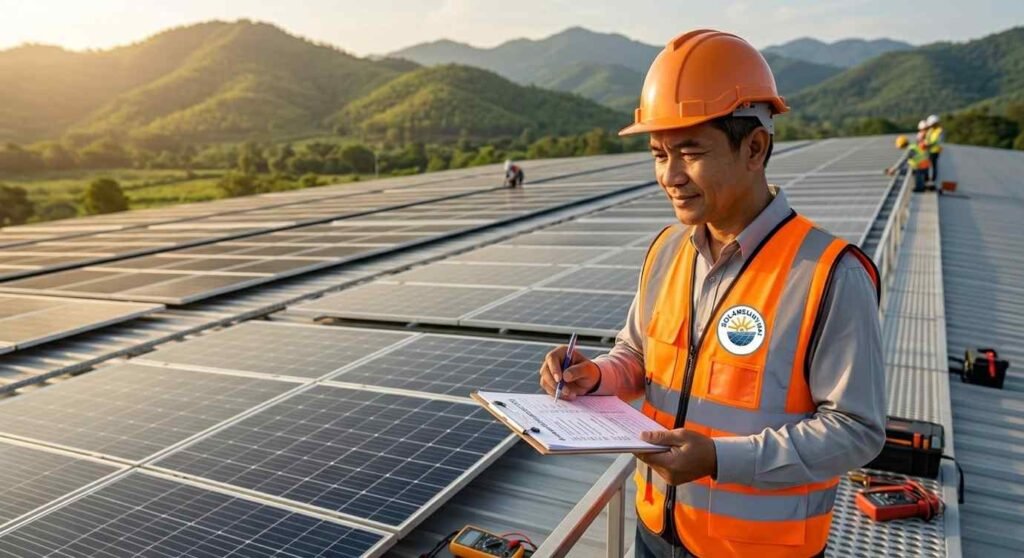
Match solar production to business demand
Many businesses are active during the same hours that solar panels produce electricity. This can create an opportunity to use solar energy directly as it is made. The strength of that opportunity depends on your actual load. A site running steadily throughout the day will need a different assessment from a venue that becomes busy mainly after sunset.
Start by describing opening hours, shift patterns and the equipment that runs in each period. Include weekends, public holiday closures and seasonal changes. Cooling, refrigeration, pumps and production machinery may account for different shares of demand. If interval energy data is available, it can give a clearer picture than monthly totals alone. Ask your electricity provider or existing monitoring team what records you can access.
Separate power needs from energy use
A business solar discussion often includes kW and kWh. Kilowatts, or kW, describe power at a particular time. Kilowatt hours, or kWh, describe energy used over a period. A machine that draws two kW for three hours uses six kWh in that simple example. Actual machinery may vary its demand while it operates, so real records are valuable.
Panel capacity alone does not show how much of your bill a system can affect. Production changes across the day and your business load may change too. Some bill items may also depend on factors beyond total energy use. A careful review looks at the bill structure and site data before making an estimate. Avoid treating a system rating as a direct promise about monthly savings.
Assess the building as well as the roof area
Large roof space can look promising, but it is only one part of the assessment. Roof condition, structural suitability, drainage, shading, access and the existing electrical system all need attention. Rooftop equipment, skylights and service routes may reduce the area available for panels. The layout also needs to allow for safe work and appropriate maintenance access.
Confirm who owns the building and who can approve changes. For leased premises, raise landlord permission and the expected length of occupancy early. If roof repairs, an extension or a production change are planned, include them in the discussion. Contact SolarSunThai with your site location and available building information so these practical points can be considered before a detailed proposal is prepared.
Choose a system around the work you do
On-grid solar can be a useful option when a business wants to use daytime solar electricity alongside its existing grid supply. When production is lower than demand, the site still needs another source of power. The expected level of direct solar use should be reviewed against your operating pattern, with particular care if the business closes during bright daytime hours.
A hybrid system adds compatible storage and controls to the discussion. A battery may help with selected later demand or a defined backup requirement, depending on the design. It also adds equipment, cost and planning needs. Explain why you are considering storage before choosing it. The business case for daytime solar and the case for battery backup should each be understandable on their own terms.
Make the next step about your property.
Share your location, electricity use and main questions with SolarSunThai. Use our contact page to begin a practical conversation.
Plan backup around critical operations
Solar panels alone should not be treated as a continuity plan. A normal on-grid system shuts down during a grid outage for safety. If your business needs power during an interruption, the system must be designed with compatible backup equipment and an appropriate electrical arrangement. This requirement should be raised at the start of the project.
List the operations that matter most during a power cut. You may need selected lights, payment equipment, communications or a particular refrigerated load. Starting currents, running power and required operating time all matter. It may not be practical to support every machine or air conditioner. Ask the proposal to state which circuits are included and the assumptions used to describe backup performance.
Make estimates useful for business decisions
A clear estimate explains its inputs. These can include expected solar production, your likely direct use, equipment choices and the electricity charges used in the calculation. Weather and demand vary. The assumptions should make those limits visible so a decision maker can understand the range of possible results and the reason for the proposed system size.
Ask for the full scope of the proposal and check what needs a site inspection before it can be confirmed. Compare proposals using consistent assumptions where possible. A lower headline figure may cover a different system or a different installation scope. If your business requires a financial review, share the proposal with the person responsible for that review and clarify any uncertain items before proceeding.
Discuss installation without losing sight of operations
Work on a business site needs coordination. Identify the person who manages access, safety arrangements and working hours. Explain delivery routes, customer areas, staff parking and any parts of the site that must remain clear. Rooftop access and the position of electrical equipment may influence how work is scheduled. These details help avoid avoidable surprises during planning.
Ask whether any electrical shutdown is expected and what coordination would be needed. The answer depends on the site and the final installation plan. Share restrictions for sensitive equipment or processes that cannot be interrupted casually. SolarSunThai can discuss these needs as part of the assessment, so any proposed work sequence can be reviewed alongside your business requirements.
Keep ownership and monitoring clear
A solar system needs a named person who knows where the monitoring information is and what to do when an alert appears. Decide who will receive the handover documents and who will keep equipment records. For a business with several managers, clear responsibility is helpful. It prevents a warning from being overlooked because each person assumes someone else is handling it.
Ask how production data can be viewed and what information is available for internal reporting. Generation figures and bill reductions measure different things, so label them carefully. Maintenance needs depend on the equipment and site conditions. Agree on the recommended approach and contact process. Do not ask untrained staff to inspect live equipment or climb onto a roof to investigate a performance concern.
Ready to talk through the options?
Tell us what you want solar to do. Our contact page is the place to request an assessment and discuss a suitable system.
Common questions from business owners
Will solar work if we rent our premises? It may be possible, but ownership approval, lease terms and the proposed installation need to be considered first. Should we use all available roof space? Not automatically. The useful size depends on your demand, roof suitability and connection arrangements. More panels do not always mean that more energy will be used by the business.
Can we plan for growth? Yes, future loads can be discussed, but describe the timing and likely demand as clearly as possible. Can solar keep the business open during a power cut? Only a suitable backup design can support the agreed loads. Contact SolarSunThai with these questions and the facts about your site so the assessment can address your actual operation.
Request a business solar assessment
Bring the conversation back to the business outcome you want. You may want to use less grid electricity during trading hours, understand whether a roof is suitable, or assess storage for selected equipment. State which outcome matters most. Clear priorities make it easier to compare system options and decide what further information is worth collecting.
Visit the SolarSunThai contact page to request a business solar discussion. Share the site location, recent electricity bills, normal operating hours and the name of the person coordinating the project. If you already have roof plans or energy records, mention them. SolarSunThai can then discuss the next assessment step and the questions needed to develop an informed proposal for your business.
Keep exploring your solar options
Review our commercial solar information to start planning around your building and working hours. Our solar installation services page explains the broader service options.
The solar calculator can provide an early estimate, while a business assessment needs a closer look at your actual demand. Before asking for a proposal, use our checklist of information to prepare for a solar quote.
Start with a clear conversation.
Tell SolarSunThai about your property and your goals. Visit the contact page to request an assessment or ask about a quotation. English: Joe +66843200279. Thai: +66847561520. Email: info@solarsunthai.com.