SOLAR SUN THAI · SOLAR GUIDES · CONTACT US
Solar Packages — Find the Right Fit for Your Home
A solar package should make your choices easier to understand. It should explain the equipment, the work included and the household needs it is intended to serve. The right starting point is your home, rather than a panel count picked without context. Your roof, electricity use and priorities all help shape a useful package.
SolarSunThai helps you explore home solar options in Thailand, including on-grid and hybrid systems with compatible battery storage. This page explains how to compare those options without assuming that every home needs the same equipment. Visit the SolarSunThai contact page to request a package discussion based on your bills, your roof and the way your household uses power.
Begin with your main reason for choosing solar
Before looking at equipment, decide what you want the system to help with. One household may want to supply more daytime electricity from its roof. Another may be interested in storing energy for evening use. A third may want to explore backup for a few important appliances. Each goal leads to different questions and may lead to a different system design.
Write down your main goal and any secondary needs. Include practical limits such as planned roof repairs or space available for equipment. This short list is useful when comparing proposals because it keeps the discussion focused on what the package needs to do. A collection of well known parts is only useful if those parts work together for your household.
Use your electricity bill as a starting point
Recent bills help show how much energy your household uses and whether that changes across the year. They do not always show exactly when the energy is used. Add a simple description of your routine: when people are home, when cooling runs and when larger appliances are used. This helps turn a monthly total into a more useful picture of demand.
Tell SolarSunThai about changes you are planning, such as another air conditioner, a home office or an electric vehicle. Include the expected timing if you know it. A package should respond to real needs, while making any assumptions clear. Avoid choosing a larger system simply because it sounds more complete; useful size depends on the home and the proposed arrangement.
Understand what package sizes mean
Solar packages often describe panel capacity in kilowatts, shown as kW. This is a power rating, not a promise about energy produced each day. Electricity use and production over time are measured in kilowatt hours, shown as kWh. A one kW load running for two hours uses two kWh in a simple example where its demand stays constant.
Ask how the proposed capacity relates to your household demand and available roof space. Expected production changes with sunlight, shade, panel layout and other site conditions. A package comparison is easier to understand when each proposal explains the same basic information: panel capacity, inverter rating, estimated energy production and the assumptions behind it. These details help you compare the actual design.
Compare an on-grid package with your daily routine
An on-grid package uses solar panels and a suitable inverter alongside your existing grid electricity supply. Available solar energy can serve household demand during daylight hours. The grid can supply electricity when solar is not enough. A household with regular daytime demand may use the system differently from one where everyone is away until evening.
Ask what happens to energy that your home does not use as it is produced. The answer depends on the system design and the connection arrangements that apply. Do not assume unused power will always create a credit on your bill. Contact SolarSunThai to discuss how your daily use fits an on-grid option and which details need to be checked for your property.
Make the next step about your property.
Share your location, electricity use and main questions with SolarSunThai. Use our contact page to begin a practical conversation.
Consider a hybrid and battery package carefully
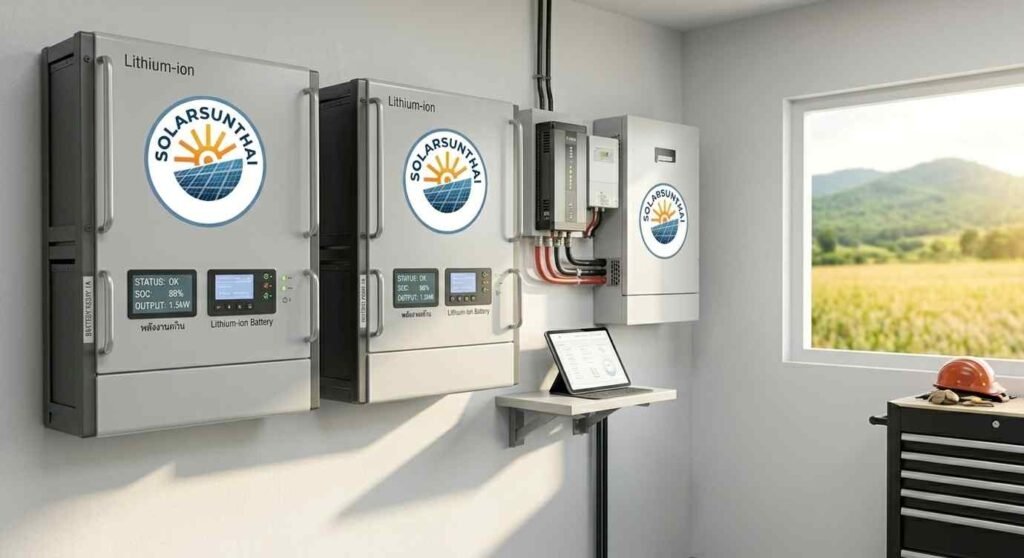
A hybrid package can combine solar panels, a compatible inverter, battery storage and controls. Storage may let the home use some solar energy later, subject to the way the system is designed and operated. It adds another set of choices, including battery capacity, charge and discharge limits, installation location and how the system manages different energy sources.
Choose storage around a clear purpose. Evening energy use and backup power are related but different questions. A battery that seems large enough by its energy capacity may still have limits on the power it can supply at one time. Ask for both types of information in plain language. Compatibility between all major parts should be confirmed as part of the proposed package.
Check whether backup is actually included
A standard on-grid solar system normally shuts down during a grid outage for safety. A package with panels does not automatically provide power during a cut. Even a package that includes a battery needs the right backup arrangement if that is part of your goal. Ask for an explicit description of the backup capability, rather than inferring it from an equipment name.
Decide which appliances you would want to keep running. Selected lights, a fridge and internet equipment have different needs from large air conditioners or water heaters. The proposal should explain the circuits included and any important limits. Battery charge at the start of the outage and changing loads affect operating time, so a fixed promise about hours of backup needs careful explanation.
Look beyond the main equipment list
Panels, an inverter and a battery are only part of a complete installation. A package also needs suitable mounting, wiring, protective equipment and a plan for connecting the system to your home. Roof access, cable routes and the existing electrical board can affect the work. A site assessment helps identify these needs before the final scope is agreed.
Ask what is included in the quoted work and what is still subject to inspection. Check whether monitoring, user guidance and handover records are covered. Ask how any additional work would be explained before it goes ahead. Clear scope helps you compare proposals and understand the difference between the price of equipment and the work required for a functioning system.
Compare proposals using the same questions
Place each proposal beside the others and check the major facts. Are panel capacity and inverter capacity clearly stated? Do the designs include storage or backup? Are the production estimates based on your roof? Does the scope explain installation and monitoring? A simple comparison built around these questions can reveal meaningful differences that are hidden by a package name.
Read equipment documents and ask for the warranty terms that apply to the specific proposed products and installation. Do not assume all parts share the same coverage or support process. Ask who you should contact with a fault and what information they will need. SolarSunThai can discuss package details with you so you know which points need clarification before making a choice.
Ready to talk through the options?
Tell us what you want solar to do. Our contact page is the place to request an assessment and discuss a suitable system.
Questions to settle before you choose
Can the package be expanded later? That depends on spare roof space, inverter design, electrical capacity and equipment compatibility. If expansion matters to you, raise it before selecting the initial system. Do you need the biggest package available? No single size suits every home. The aim is a useful match to your present needs and realistic future plans.
Will a package produce the same energy every day? No. Daily output changes with weather and other conditions. Can a package eliminate the whole bill? That should not be assumed. Energy use, timing, tariff arrangements and system performance all affect the outcome. A clear proposal helps you understand these limits and the reasons behind the recommended system.
Ask SolarSunThai for options that fit your home
You do not need to decide between every product before the first conversation. Start with your goal, a recent bill and a description of your home. Add any roof photos you can safely take and mention future electrical loads. This information makes it easier to discuss a package that responds to your circumstances and identify any checks needed next.
Visit the SolarSunThai contact page to request your solar package assessment. Tell us whether you want to explore on-grid solar, a hybrid system, battery storage or backup for selected appliances. Ask for the equipment and installation scope in clear language. With your needs on the table, you can compare suitable options and choose a next step with a better understanding of what is included.
Keep exploring your solar options
See the current options on our solar packages page, then review the solar products information when discussing the equipment in a proposal.
Use the solar calculator to explore an initial savings estimate with clear assumptions. If you are comparing a package that includes storage, read our guide to battery capacity, evening use and backup limits.
Start with a clear conversation.
Tell SolarSunThai about your property and your goals. Visit the contact page to request an assessment or ask about a quotation. English: Joe +66843200279. Thai: +66847561520. Email: info@solarsunthai.com.