SOLARSUNTHAI / 02 — UNDERSTAND YOUR EQUIPMENT
Every component.
One solar system.
Solar equipment can be hard to compare when every quote lists different brands and numbers. Here’s what the main parts do, what to look for and which questions are worth asking.

Equipment models and installation scope are confirmed in your quotation.
WHAT YOUR SOLAR SYSTEM DOES
How solar panels, inverters and batteries work together.
01 / GENERATE
Solar panels
Photovoltaic modules produce direct-current electricity from daylight. Available roof area, shading, module wattage and mounting requirements shape the array design.
02 / CONVERT
On-grid & hybrid inverters
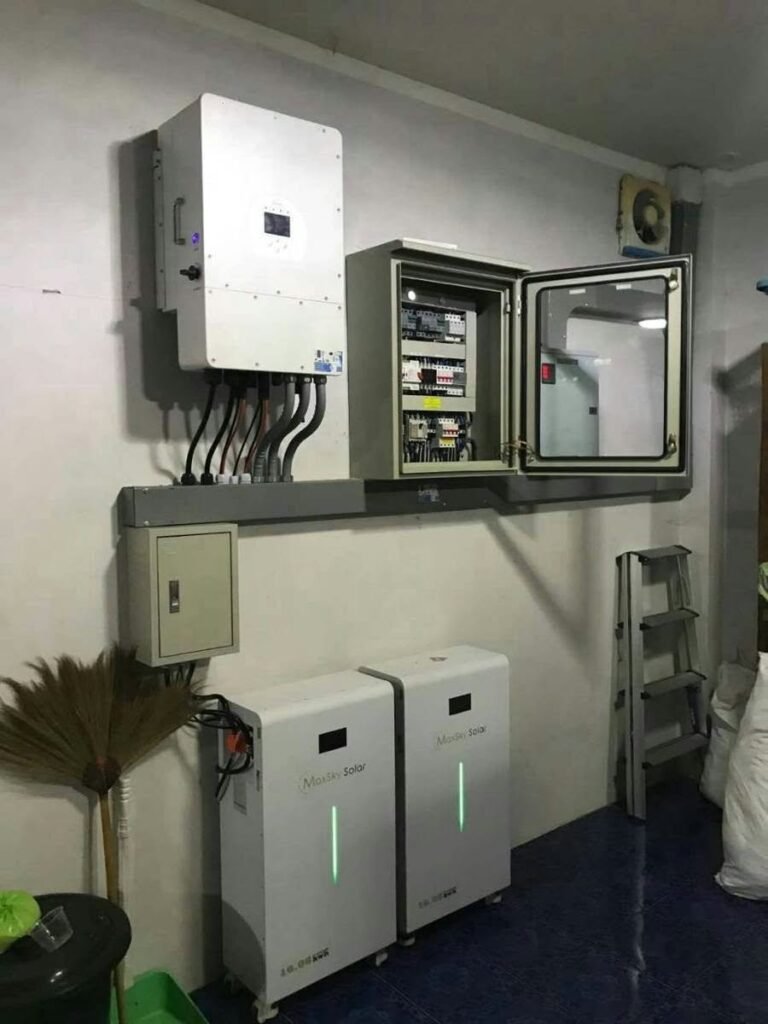
Inverters turn DC into AC for your property. A hybrid model can integrate compatible storage; supply phase, power limits and backup capability matter.
03 / STORE
Battery storage
Store excess generation for later use. Nominal kWh, usable capacity, charge/discharge power, cycle conditions and warranty terms all affect the right choice.
04 / SECURE
Mounting & roof integration
Fixings and rails should suit the roof material, structure, clearances and local conditions. A safe layout is part of the system design.
05 / PROTECT
Electrical protection
Cabling, isolation, earthing and protection equipment are specified as part of the installation scope. Connections and authority requirements need review.
06 / UNDERSTAND
Smart monitoring
See generation and system status through the selected monitoring platform. We explain access, connectivity requirements and handover.
STORAGE WITHOUT THE GUESSWORK
Choose battery storage around your energy needs.
- Usable capacity: how much energy you can actually use
- Power output: which appliances can run together
- Compatibility: inverter, battery and monitoring platform
- Backup: agreed circuits, isolation and operating limits
- Warranty: coverage, exclusions and performance conditions
A 10 kWh battery is an energy store, not a promise of a fixed backup runtime. The appliances you connect and the energy available determine how long it lasts.
CLEAR SCOPE. LONG-TERM SUPPORT.
PANELS
Panel cover
Panel product and performance warranties cover different things. Check the model, both sets of terms and how to make a claim.
INVERTER
Inverter cover
Check the inverter model, warranty length and who pays for labour or transport if it needs replacing.
BATTERY
Battery cover
If your quote includes a battery, check its usable capacity and warranty limits. A hybrid inverter by itself doesn’t mean a battery is included.
WORKMANSHIP
Installation cover
Ask what the installation warranty covers, how long it lasts and who to contact if something goes wrong.
THE EQUIPMENT, BROUGHT TOGETHER
Use a package as a starting point.
Our seven PSI packages range from 3.3 kW to 50 kW, with hybrid and battery options. Start by comparing the size and price, then ask us to check the details against your roof and electricity use.
Your quote should name the panel, inverter and battery models where included. It should also set out the mounting, wiring, protection, monitoring and any additional work. If a different model is proposed later, ask how it changes the price, performance and warranty before agreeing.
A larger panel array doesn’t automatically mean better value. The inverter limits, roof conditions and amount of solar electricity you can use all matter. For batteries, compare usable kWh as well as the power available to run appliances.
Compare the solar packages or ask us to look at your building.
Before you compare equipment.
An ordinary on-grid system disconnects when the grid fails. Backup needs a compatible hybrid inverter, battery, safe isolation/changeover arrangement and agreed essential circuits. Adding a battery does not automatically mean every appliance is backed up.
Not always. If you use most electricity in the day, on-grid solar may offer a simpler starting point. Storage can be useful when you have surplus daytime generation and evening demand, or when you want a designed backup capability. Compare the extra cost with your priorities.
It describes your electrical supply, not a quality tier. Both supply types can use on-grid or hybrid systems. Your bill, meter and electrical survey help us select compatible equipment.
Use monitoring to check generation and investigate persistent changes. Arrange inspections and cleaning appropriate to your roof, local conditions and manufacturer guidance. Leave roof access and electrical checks to appropriately qualified people.
YOUR NEXT STEP
Ready to find out whether solar makes sense for you?
Send us a recent bill and tell us where the building is. We’ll talk through the options, confirm coverage and explain the next step. There’s no obligation to buy.